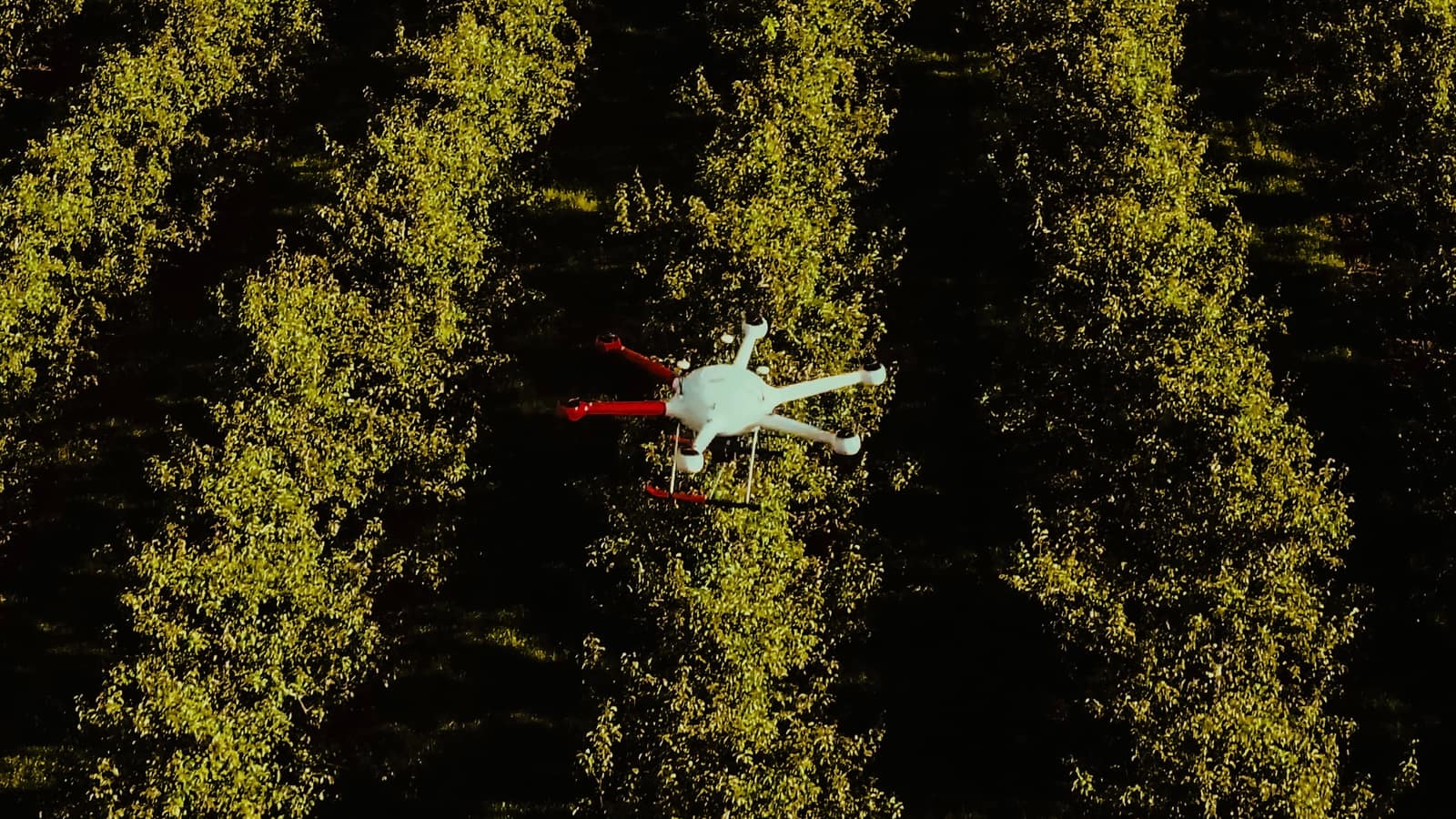
An M3 aircraft over a Washington apple orchard.
cct.m3agtech.com

TRAIN · a regional partnership

Tribal Regenerative
Agriculture & Innovation Network

Confederated Tribes of the Colville Reservation (CCT)
Circular Agriculture Solutions (CAS)
M3 Agriculture Technologies

Regional Regenerative Agriculture


A changing region CCT is adjacent to and part of a major apple-producing area where growers are beginning to rethink how they manage codling moth.
A regional approach Area-wide sterile insect release manages codling moth across the broader agricultural landscape, reducing reliance on chemical controls and avoiding insecticide resistance.
An opportunity to lead This partnership gives CCT the opportunity to help lead the transition toward regenerative agriculture in the region.
Colville Reservation Sterile release buffers, 2026 Projected footprint, 2031 33,000 acres by 2031
30 years of area-wide release in British Columbia 100% 50% 0 pesticide record ends 2016 Pesticide use Moth population 1995 2005 2015 2025 Wild captures down more than 92%, pesticide down 88 to 97% since 1991. Source: OKSIR 2025 season-end results

02

The Shift


Federal agriculture policy is moving towards tools that reduce the environmental cost of growing food, and sterile insect release is one tool that supports this effort.

01. Federal direction Executive Order 14414 The June 2026 order directs expanded federal investment in regenerative agriculture, research, education, and public-private partnerships, while supporting technologies that reduce reliance on conventional chemical crop protection.
02. Federal funding EQIP NRCS provides financial assistance for conservation practices on working lands. Indian Tribes are eligible applicants, and historically underserved producers may receive higher payment rates, up to 90% of approved practice costs, and advance payments.
03. The implementation pathway Pest Management Conservation System · Code 595 Code 595 is an existing NRCS conservation practice for pest management systems and provides the potential framework through which sterile insect release could be incorporated into conservation planning and financial assistance.
04. The regional opportunity Make sterile release a priority If sterile release can be established as a high-priority practice within the relevant NRCS framework, enhanced payment rates could extend beyond CCT and help accelerate adoption across the broader agricultural district.

03

The Damage Cycle


Codling moth damages apples from the inside, making them unmarketable.

CODLING MOTH DAMAGE CYCLE THE SEASON FIRSTFLIGHT EGGS LAID FRUIT DAMAGE PUPATION SECONDFLIGHT
Select any stage Each wedge is one step in the season. Select a stage to read it, then select it again to advance to the next.
Overlapping generations across the season 1st 2nd 3rd APR MAY JUN JUL AUG SEP

04

Breaking the Cycle


Sterile release anchors the next generation of regenerative orchard management by breaking the mating cycle without chemicals.

SIR significantly reduces codling moth populations SIR 1st 2nd 3rd APR MAY JUN JUL AUG SEP Dashed, before area-wide release. Solid, under sustained release.

05

Growth Opportunity in Washington


174,000 Washington bearing acres Of 299,500 nationally.
5,200 Acres under M3's Sterile Insect Release More than 100,000 acres treated across the 2026 season, from weekly releases on those same acres.
YEAR ACRES MARKET SHARE * 2026 5,200 3% 2029 14,500 8% 2031 33,000 19% 141,000 acres still unserved 81% 174,000 WASHINGTON YEAR ACRES SHARE 0 * 2026 5,200 3% 2029 14,500 8% 2031 33,000 19% 141,000 acres still unserved 81% 174,000 WASHINGTON

* Current supply ceiling, 12,000 acres.

$425/acre M3 sterile release
$450–$800/acre Conventional management
$850+/acre Organic management

06

Partnership Implementation


Seal of the Confederated Tribes of the Colville Reservation. Circular Agriculture Solutions mark. M3 Agriculture Technologies mark.
TRAIN
Colville Confederated Tribes (CCT)
CCT regulates.
CCT regulates pesticide use in orchards on Tribal land and encourages growers to adopt SIT as a compliant practice.
Circular Agriculture Solutions (CAS)
CAS coordinates.
CAS coordinates program management on Tribal land and runs on-farm trials to research SIT adoption.
M3 Agriculture Technologies
M3 operates.
M3 operates commercial services and hires tribal members.

07

Circular Agriculture Solutions (CAS)


Circular Agriculture Solutions mark.

Bridging the gap between research and the practical application of regenerative agriculture by working directly with farmers through on-farm research and outreach.

501(c)(3) since 2024 Field focused Farmer first Data driven

Dr. Elizabeth Davidson-Lowe.
Dr. Elizabeth Davidson-Lowe
Research Director & Program Lead
Guides the research strategy and on-farm work that supports local growers, helping bring practical regenerative tools to the community.
Background in applied ecology, agricultural research, and program development across federal, academic, and industry settings.

Dr. Erin Treanore.
Dr. Erin Treanore
Co-founder
Supports project design, research planning, and coordination for Circular Ag programs.
Background in pollinator ecology, ecosystem health, and regenerative agriculture, with experience connecting science to community-based land stewardship.
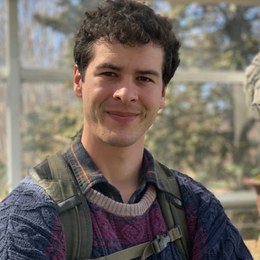
Andy Blunk.
Andy Blunk, MSc
Co-founder
Contributes to grower outreach, logistics, and development of project partnerships and funding.
Background in sustainable agriculture engineering and circular systems, with hands-on experience implementing practical solutions with farmers.

08

A model for building farm-based solutions


Circular Agriculture Solutions mark.

Circular Agriculture Solutions (CAS) turns agricultural challenges into practical, locally relevant programs.
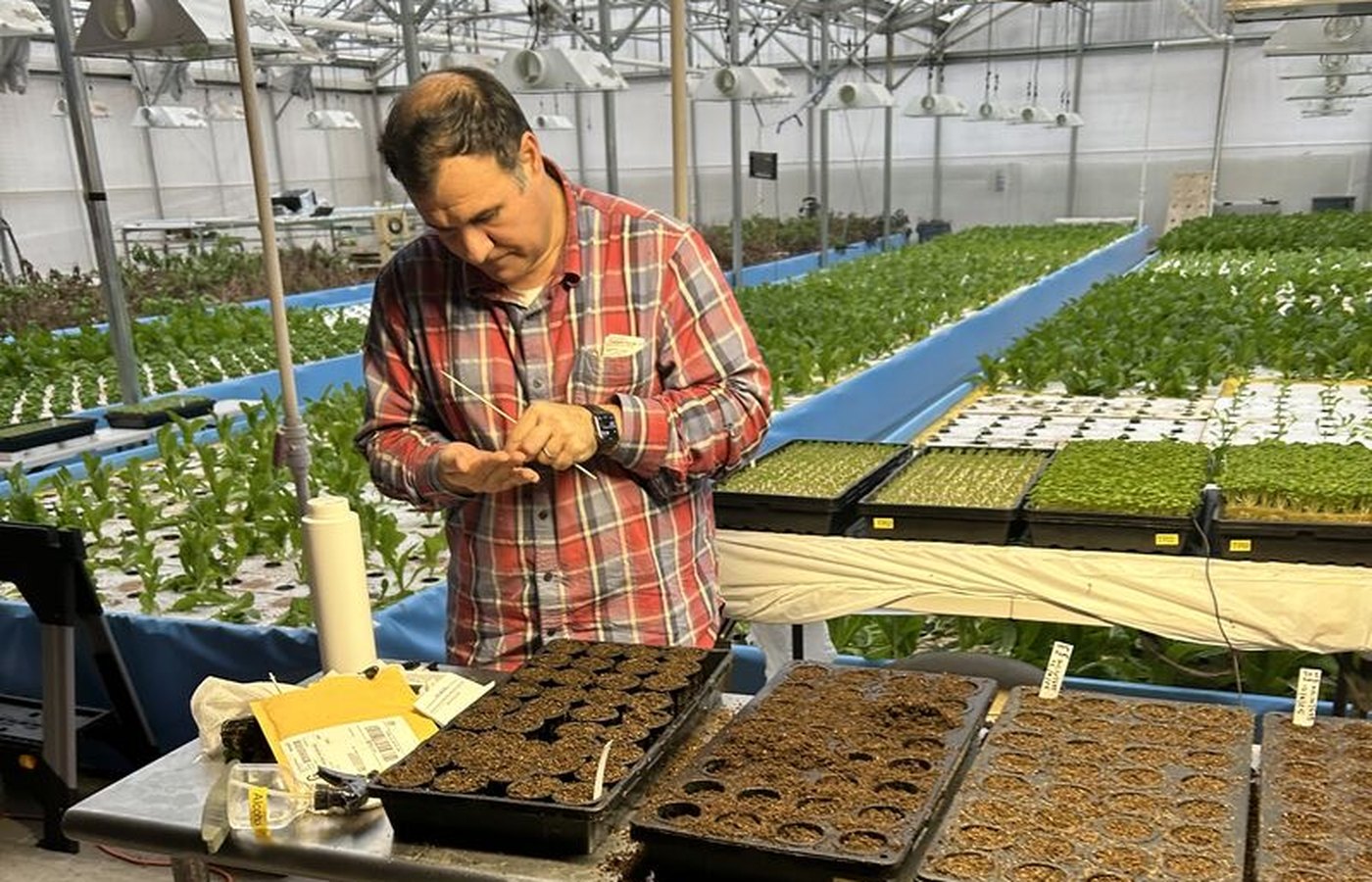
A researcher in a greenhouse working with seedling trays of growing media.
Black soldier fly frass Local resource → on-farm trial → grower adoption pathway Secured Northeast SARE funding (2024–2027) to work with urban lettuce producers in Boston and Washington, DC. CAS runs on-farm trials using insect frass as an alternative to peat-based growing media, generating data while familiarizing growers with the practice.
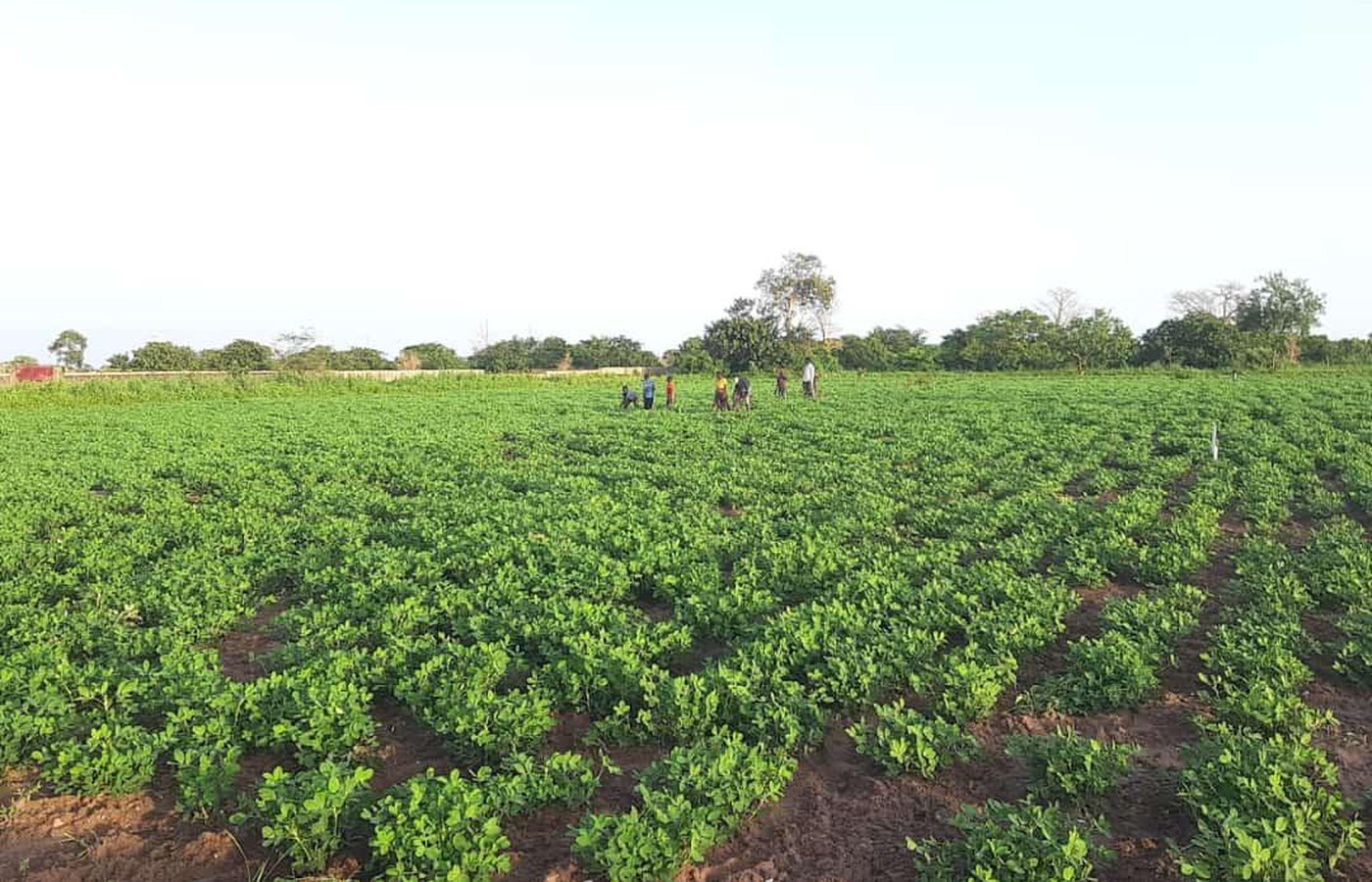
A field of groundnuts under trial in The Gambia, with people working along the rows.
Oyster shell recycling Local resource → on-farm trial → soil health solution Developed field trials in The Gambia testing discarded oyster shells as a locally available amendment for acidic soils. CAS works directly with growers to evaluate performance and build comfort with the practice for long-term use.

Local resources become solutions when growers help test, refine, and adopt them

09

What CAS Provides


Circular Agriculture Solutions mark.
Regenerative agriculture coordinator Establish CCT as a scientific voice growers consult.
01. Program management Coordinates research priorities, field trials, partners, and deliverables to advance the program.
02. Scientific guidance Provides scientific and technical guidance on agronomic and pest management decision support to CCT and growers.
03. Federal program alignment Aligns sterile release with NRCS conservation programs and supports grower enrollment.
04. Funding development Identifies and develops funding opportunities to sustain and expand the program.

10

M3's Contribution


M3 Agriculture Technologies mark.

M3 plans to build research infrastructure on the reservation to create local job opportunities.

01. Rearing facility Local sterile-insect production built on the reservation, creating technical jobs and supporting regional growers.
02. Research capacity On-site labs advancing release methods, monitoring, and quality control, generating long-term tribal scientific expertise.
03. Tribal hiring M3 would partner with the Tribal Employment Rights Office (TERO) to prioritize tribal hiring and provide training for technical and research roles.
04. Year-round employment Tribal staff would operate production, monitoring, and research roles through the year, producing reliable income beyond seasonal field work.

11

Year 1 Deliverables


Month
3
6
9
12
Program framework and advisory group
Monitoring and data protocol
Federal pathway and funding development
Career pathway and skills assessment
Grower network and enrollment

12

Year 1 Budget


Year 1 is coordination, planning and grant development, so the budget is lean.

Salary $125,000
Travel $10,000 Grower meetings, tribal meetings, field visits, regional coordination.
Program operations $8,000 Outreach materials, meeting facilitation, monitoring supplies, communications.
Data and software $4,000 GIS tools, data storage, analysis platforms, survey tools.
Indirect costs $22,000 Nonprofit overhead at 15 percent of direct cost.
Year 1 total $169,000

13

What CCT Gains


Seal of the Confederated Tribes of the Colville Reservation.
Landscape-scale environmental benefits Reduces pest pressure and chemical inputs beyond participating farms, supporting healthier soil, water, habitat, and communities.
Regional leadership Positions CCT as a leader in regenerative, area-wide pest management across the region.
Local expertise Builds CCT capacity in insect production, pest management, and regenerative agriculture.
Local jobs Creates year-round agricultural and technical employment in the community.
Leveraged and sustained funding Uses initial CCT investment to establish the program, then pursues federal and competitive funding to sustain and expand it.
A platform for growth Establishes infrastructure, partnerships, and research capacity that can support future regenerative agriculture priorities.

14

Returns on CCT's Year-One Investment


Year-one funding builds the foundation for a tribally led regenerative agriculture program and long-term job growth.

PROGRAM LAUNCH $169,000 establishes the program Year-one funding launches coordination, monitoring, grower enrollment, and workforce training. CAS documents the NRCS pathway, so growers can access EQIP Practice 595 cost-share.
REGIONAL EXPANSION 5,200 → 33,000 acres M3 serviced 5,200 acres in 2026. Supply is capped at 12,000. Reservation orchards add roughly 9,000, and regional participation could reach 33,000 by 2031.
THE JOBS Tribal workforce development Three to six field roles emerge as reservation orchards join. Year-one training spans laboratory, drone operations, monitoring, and data management. M3 would fill new positions through TERO. On-reservation production would add 10 to 25 year-round roles.
CCT LEGACY Capacity Year-one investment builds tribal expertise, a monitoring record on tribal lands, and standing in federal conservation programs. Tribal ownership of that data supports environmental decision-making.

15

5-year Plan


The work, year by year
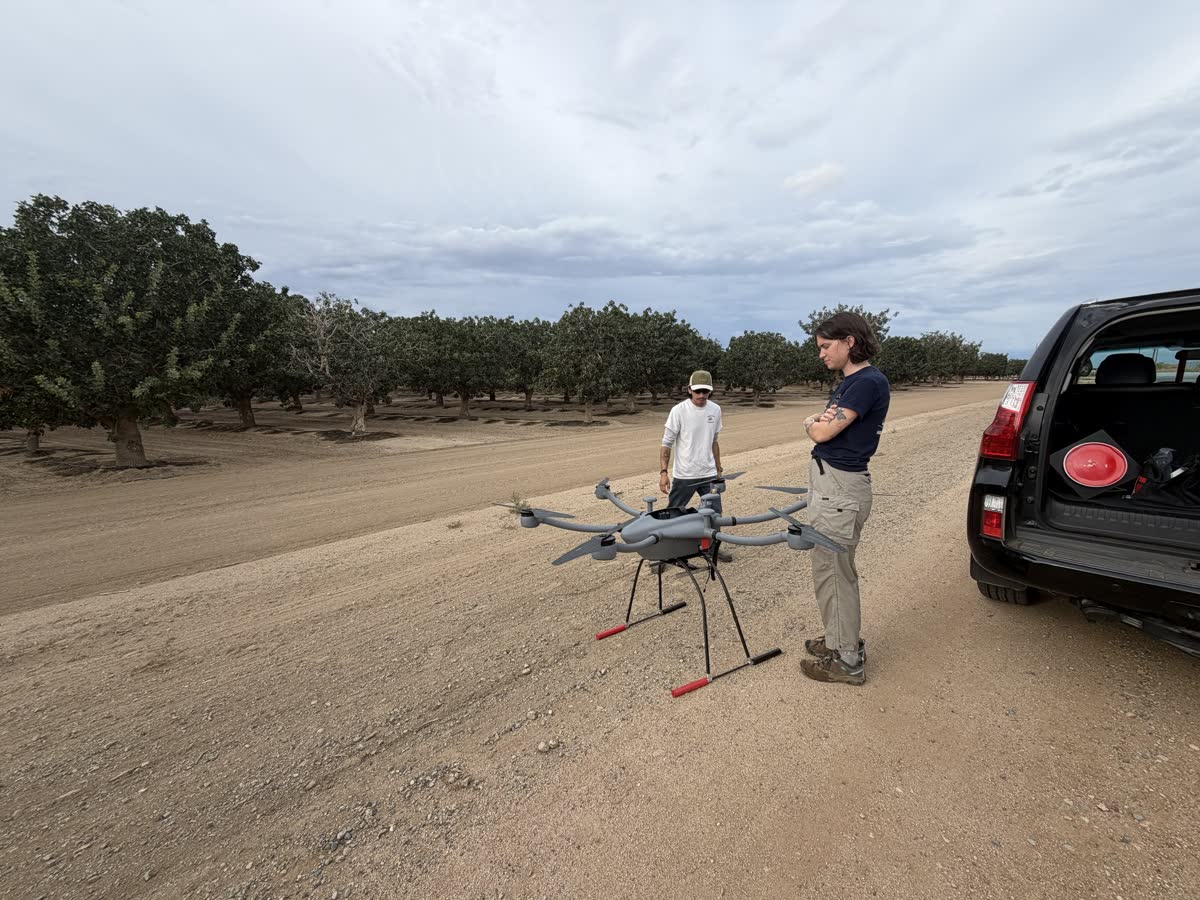
Two crew members beside an M3 aircraft on an orchard road.Training and enrollment
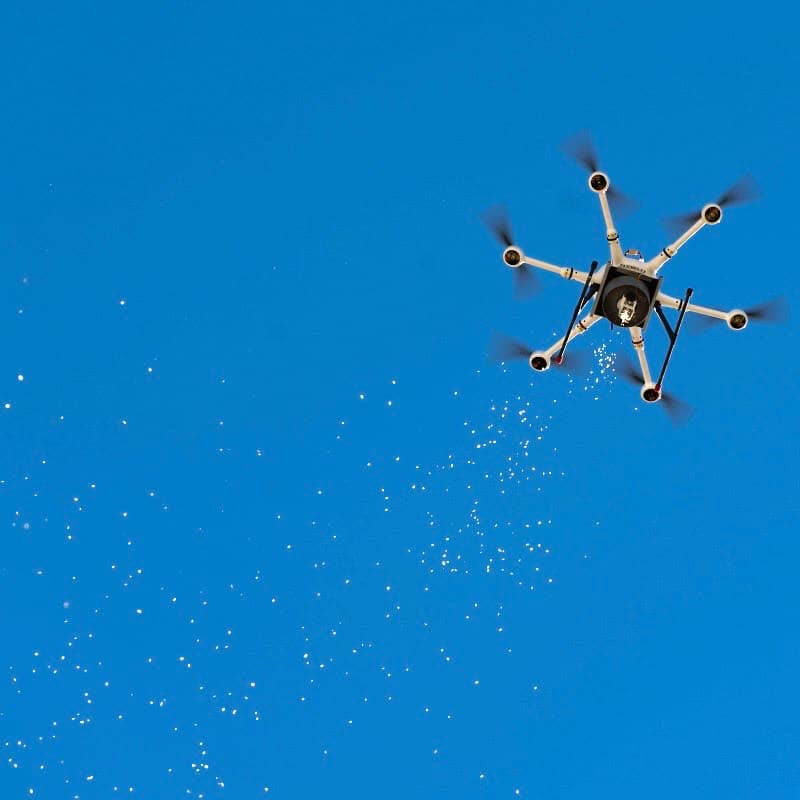
An M3 aircraft releasing sterile insects against a clear sky.Sterile release from the air
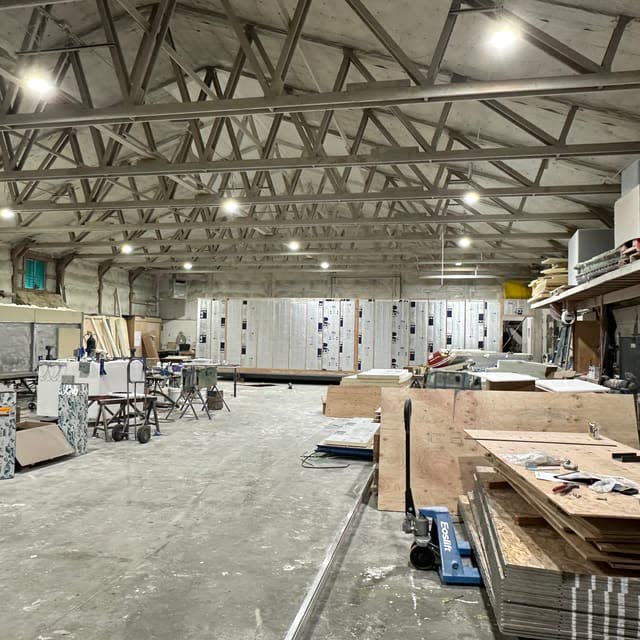
Production modules under construction in a workshop.Production modules under construction
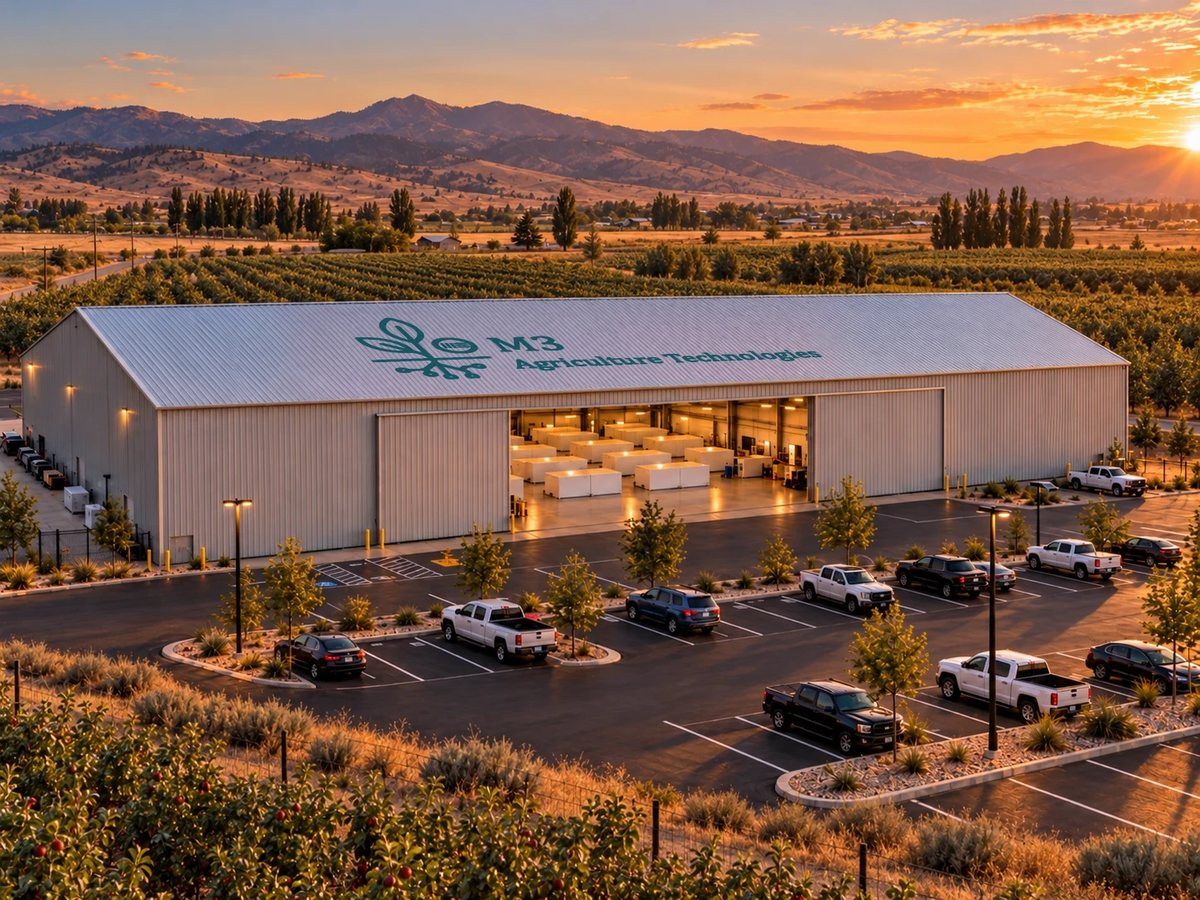
Rendering of an M3 facility among orchards, with hills behind at sunset.On-reservation facility, in operation (render)
Year 1
Year 2
Year 3
Years 4 to 5
ProgramRelease and monitoring
Foundation. Advisory group, framework, monitoring design, growers enrolled.
Coordinated sterile release in priority zones. Monitoring baselines established.
Coverage expands. 14,500 acres.
Practice adopted across the apple-growing region.
WorkforceTribal jobs and training
Technical training begins. Career pathway assessed.
Lab and field positions coordinated through TERO.
Facility operational. 10 to 25 year-round positions.
FundingInvestment and infrastructure
$169,000 from CCT. EQIP applications submitted.
Cost-share in place for enrolled growers.
Construction of on-reservation production begins.
Multi-year research awards carry the program. CCT a trusted voice.

16

cct.m3agtech.com

Thank You


Dr. Elizabeth Davidson-Lowe. Circular Agriculture Solutions mark.
Dr. Elizabeth Davidson-Lowe
Research Director & Program Lead
Circular Agriculture Solutions (CAS)
liz@circular-ag.org

Nathan Moses-Gonzales. M3 Agriculture Technologies mark.
Nathan Moses-Gonzales
CCT Enrolled Member & CEO
M3 Agriculture Technologies
nmosesgo@m3cg.us

17